Seddiner Inseln.
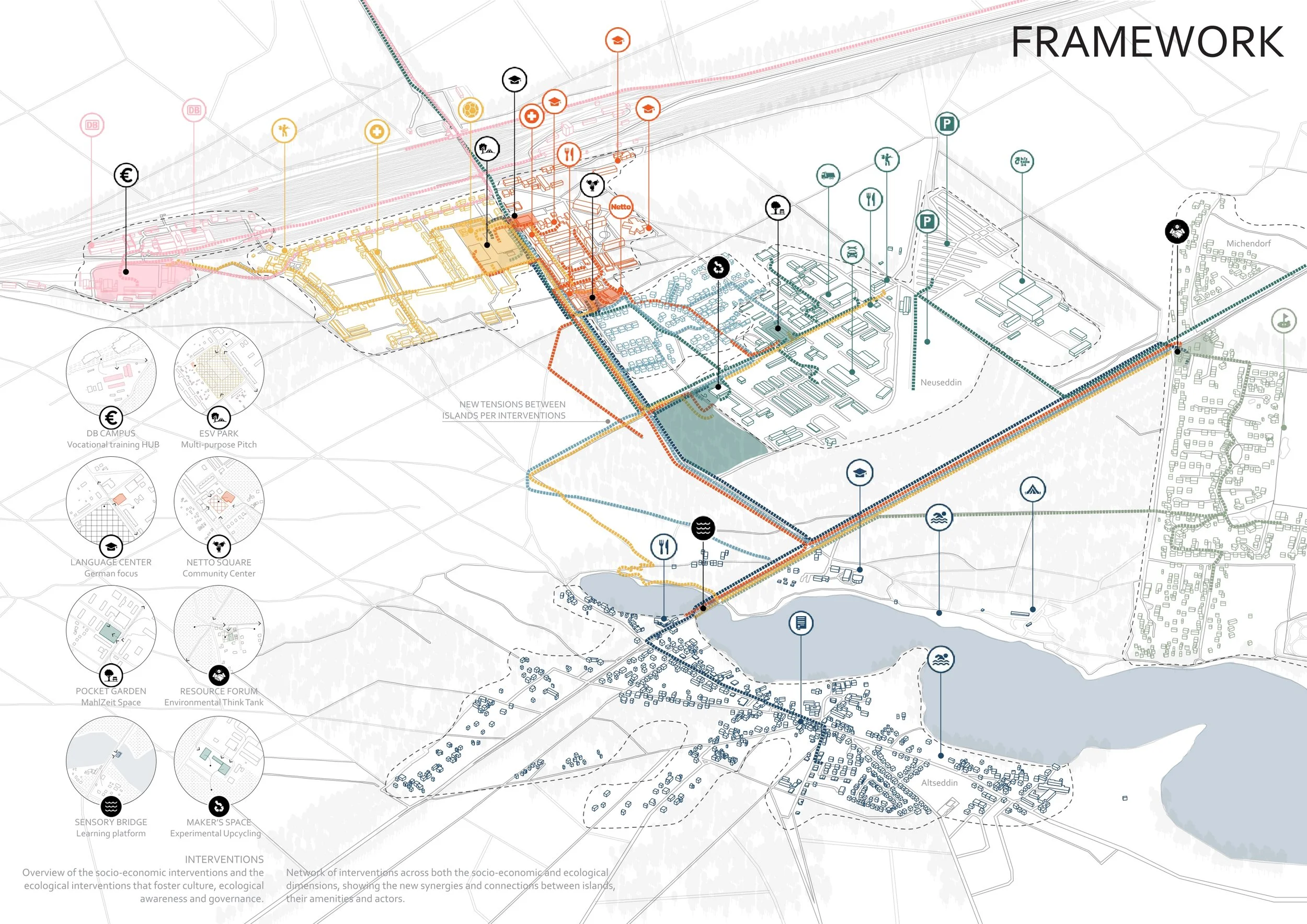
Seddin has a unique spatial structure made up of several disconnected islands: Altseddin, Neuseddin’s residential, mixed-use and industrial areas, and Michendorf’s golf and residential edge. Although spatially separated, these islands are connected by shared socio-economic and ecological conditions. Neuseddin itself functions as an archipelago, where different spatial characters, uses and actors create distinct experiences. The residential island faces a lack of gathering spaces and tensions between long-term residents and refugees. The mixed-use island, structured around GDR housing, contains the town’s schools and its main social hotspot: the Netto parking lot and bakery. The industrial island is dominated by large-scale infrastructure and workers who largely commute from outside the town. Between these islands, forests and the Seddiner See form a shared ecological landscape facing deforestation, biodiversity loss, soil exhaustion, forest fires and declining water levels.
How can these existing socio-economic and ecological entanglements support social cohesion and connect Seddin’s islands? Two layers of interventions are proposed.
The first layer works within Neuseddin’s archipelago, strengthening each island’s character while addressing the needs and creating connections between them. On the residential island, the football field can become a shared space for sports, flea markets, fairs, music and a more private prayer space. On the mixed-use island, an abandoned building can become a German language center, reducing the need for refugees to travel to Potsdam. The Netto parking lot can also be transformed into a public square, supported by a community center, creating a stronger cultural and social commons.
The second layer connects Neuseddin with Altseddin and Michendorf through their shared ecological risks. An abandoned industrial building can become a maker and production space using industrial waste to produce elements such as bird boxes, planter boxes and hedgehog shelters for local reforestation and biodiversity projects. At Altseddin, the lake edge and bridge can become spaces for learning about the falling water levels, with descending paths and aquifer listening stations making the hidden water system visible and audible. Other interventions, such as a garden for industrial workers and a Deutsche Bahn vocational training campus, strengthen both local and regional connections.
Rather than removing the islands’ differences, we use their individual qualities and shared problems as opportunities for connection. By creating spaces and resources that move between islands, socio-economic needs and ecological risks become tools for building social cohesion across Seddin.
Urban Design Studio - 2025-2026
Group members: Rayan Alfadel, David Blume, Rozafa Rechi, Jingnan Wang, Maria Luisa Barrero, Citlalli Marin
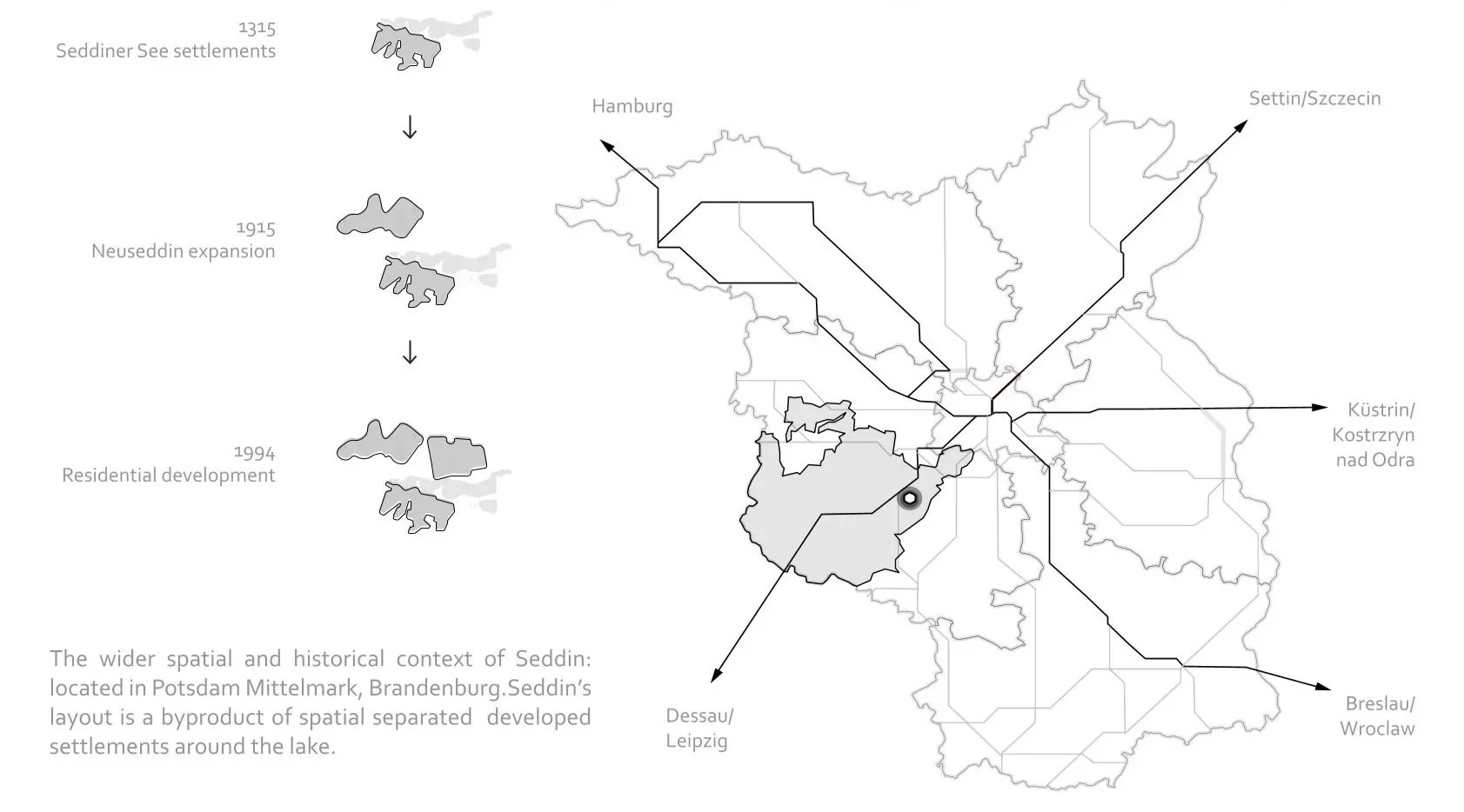
Seddin's morphology in Potsdam Mittelmark
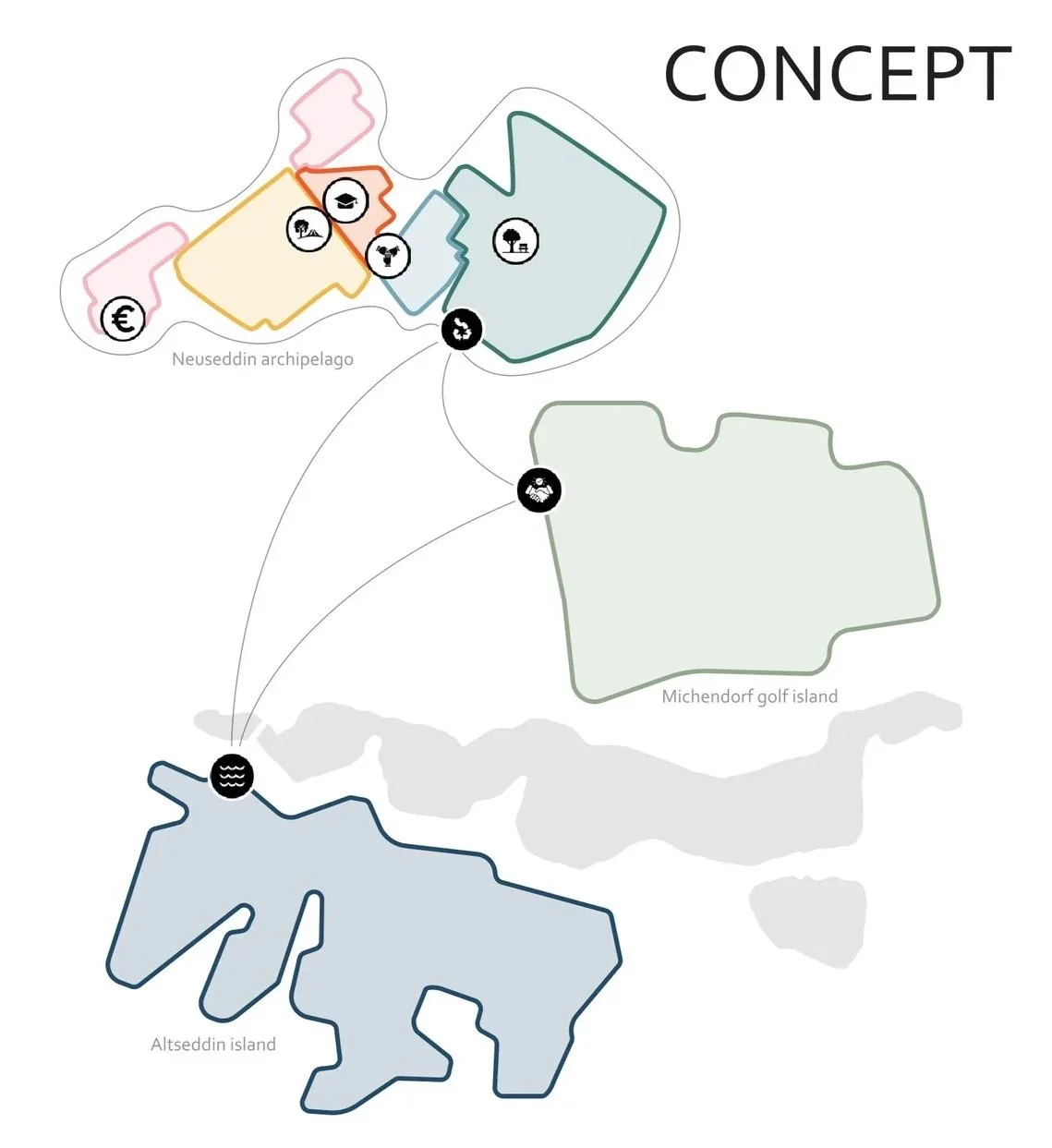
Conceptual framework
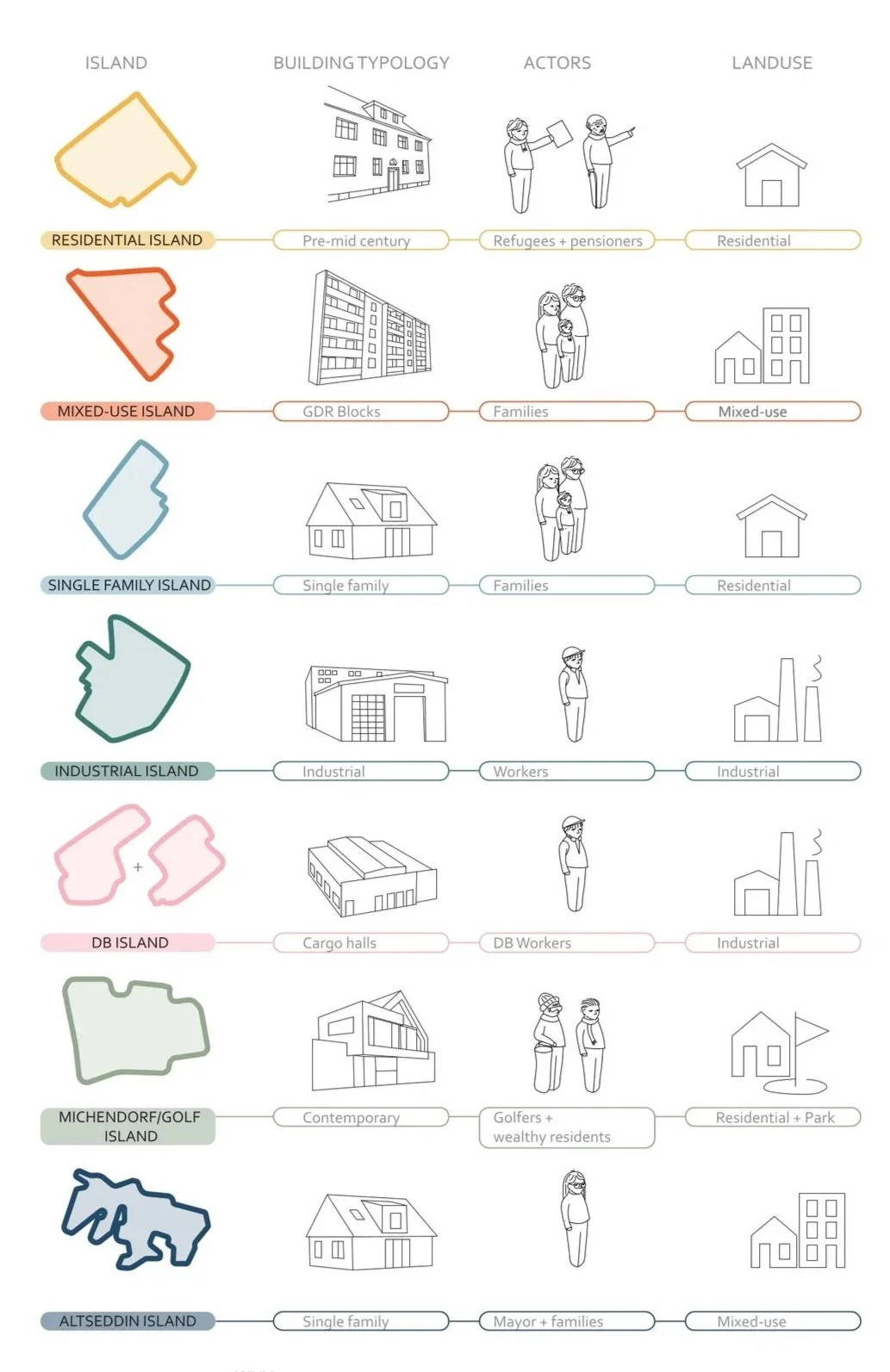
Seddin's islands
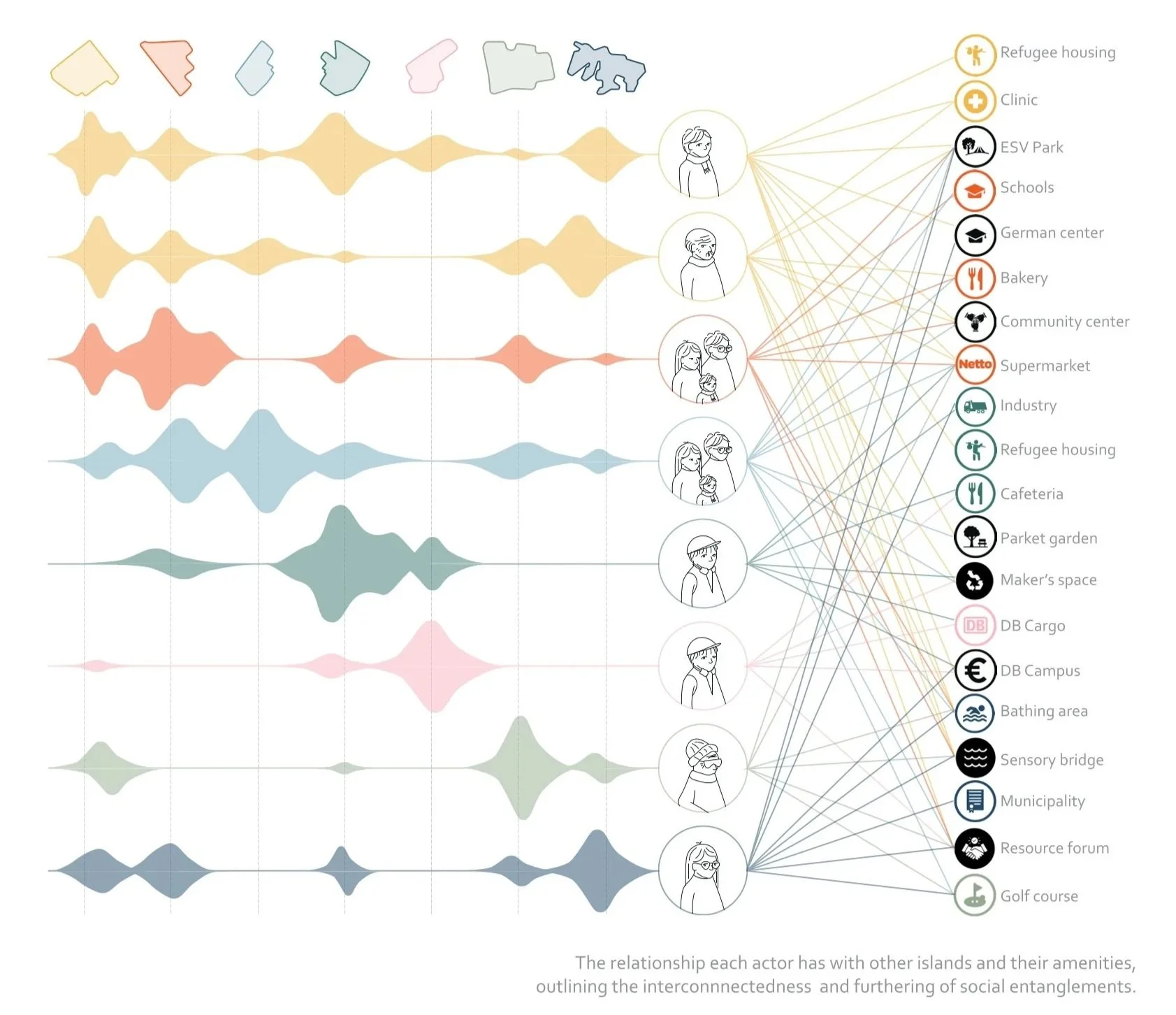
Actors across islands
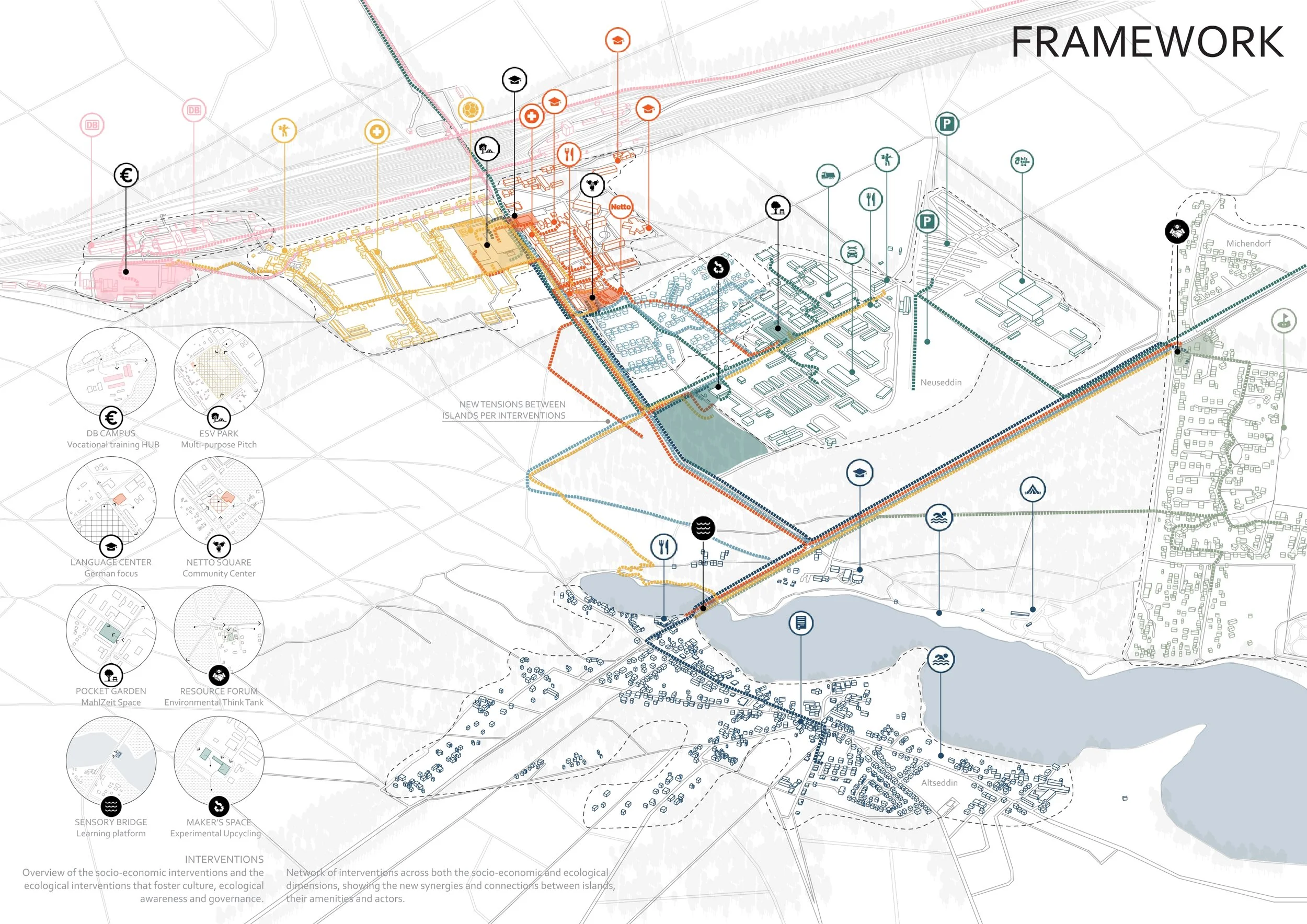
Intervention strategies and framework
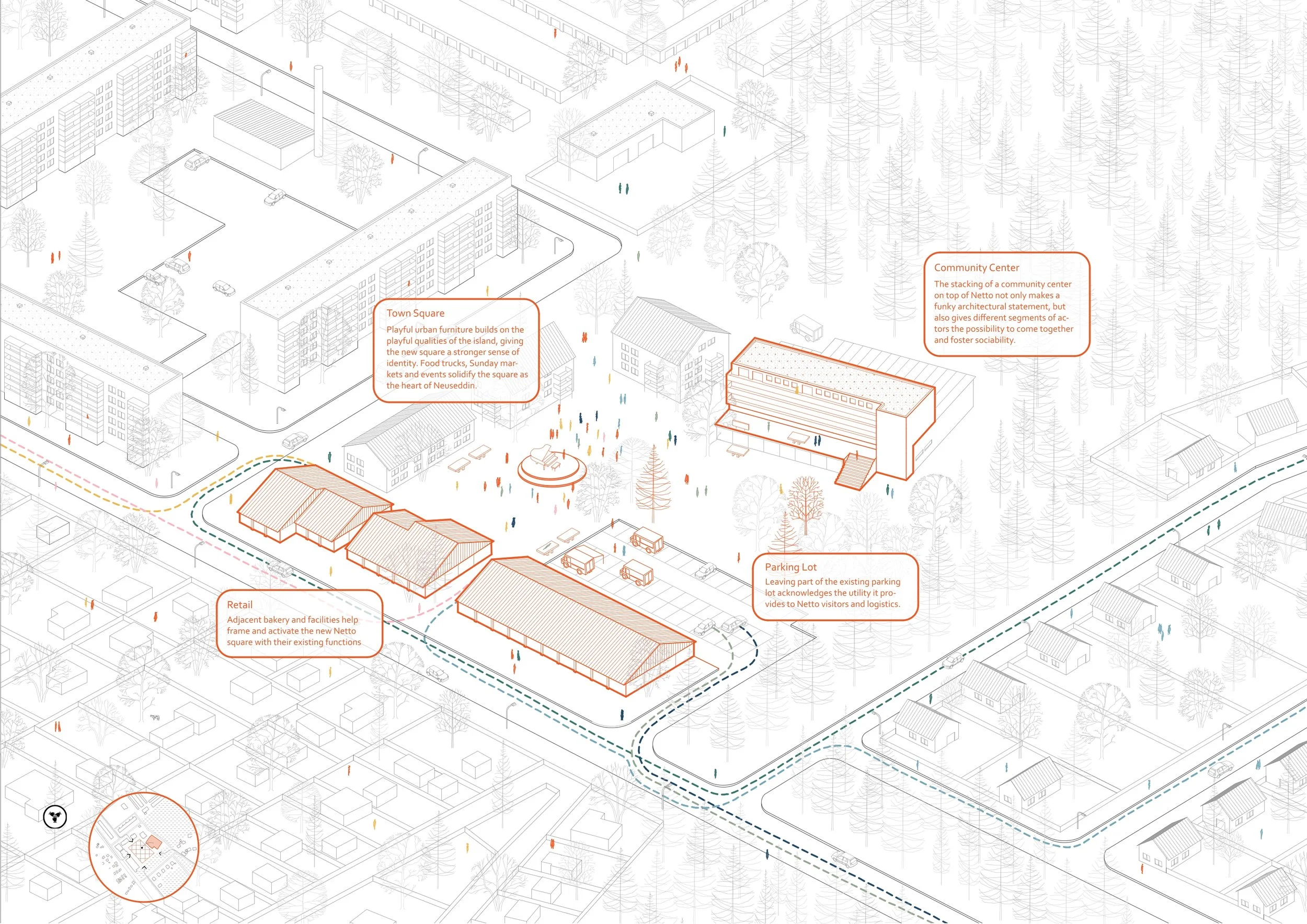
Netto square intervention
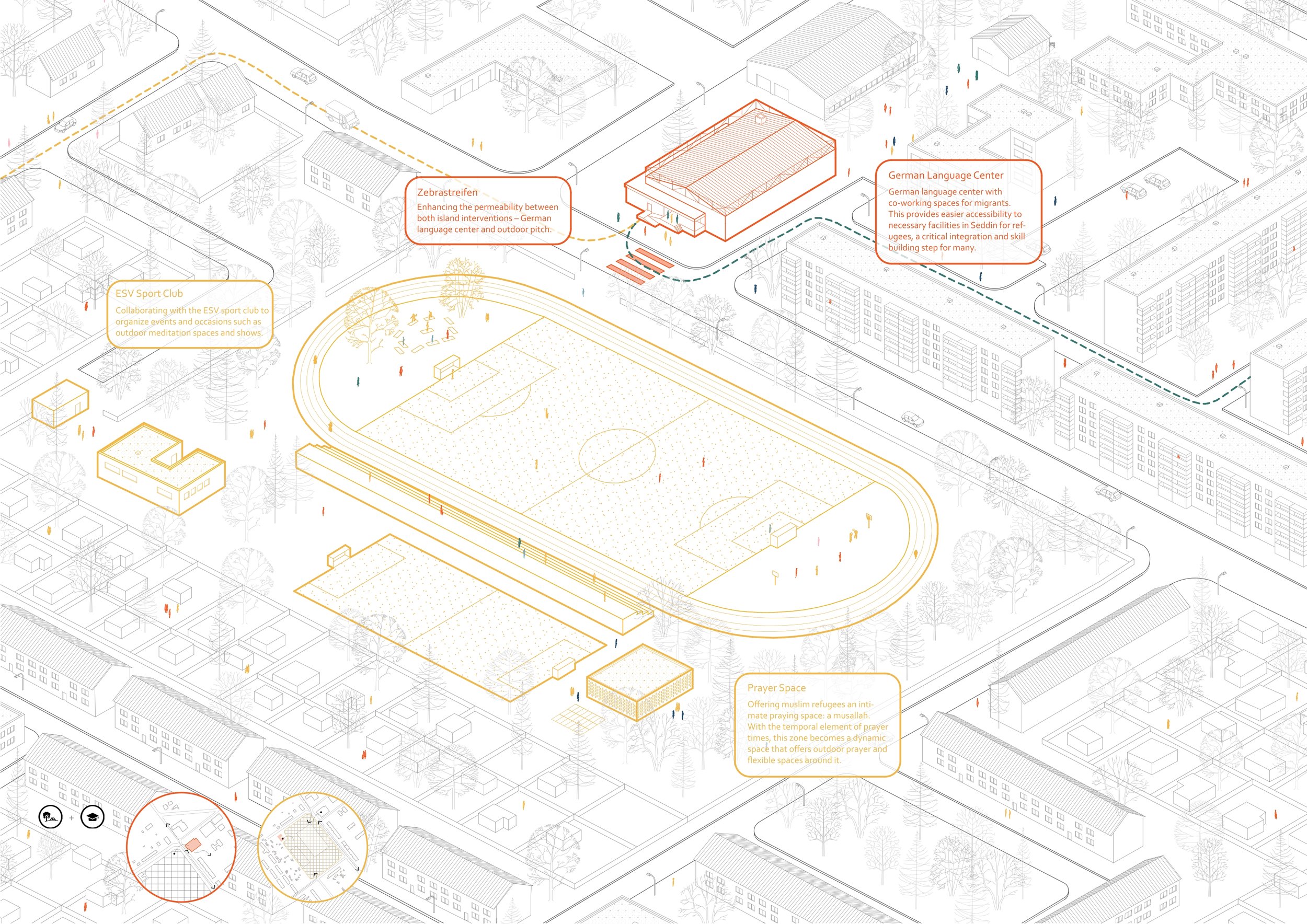
Football pitch intervention
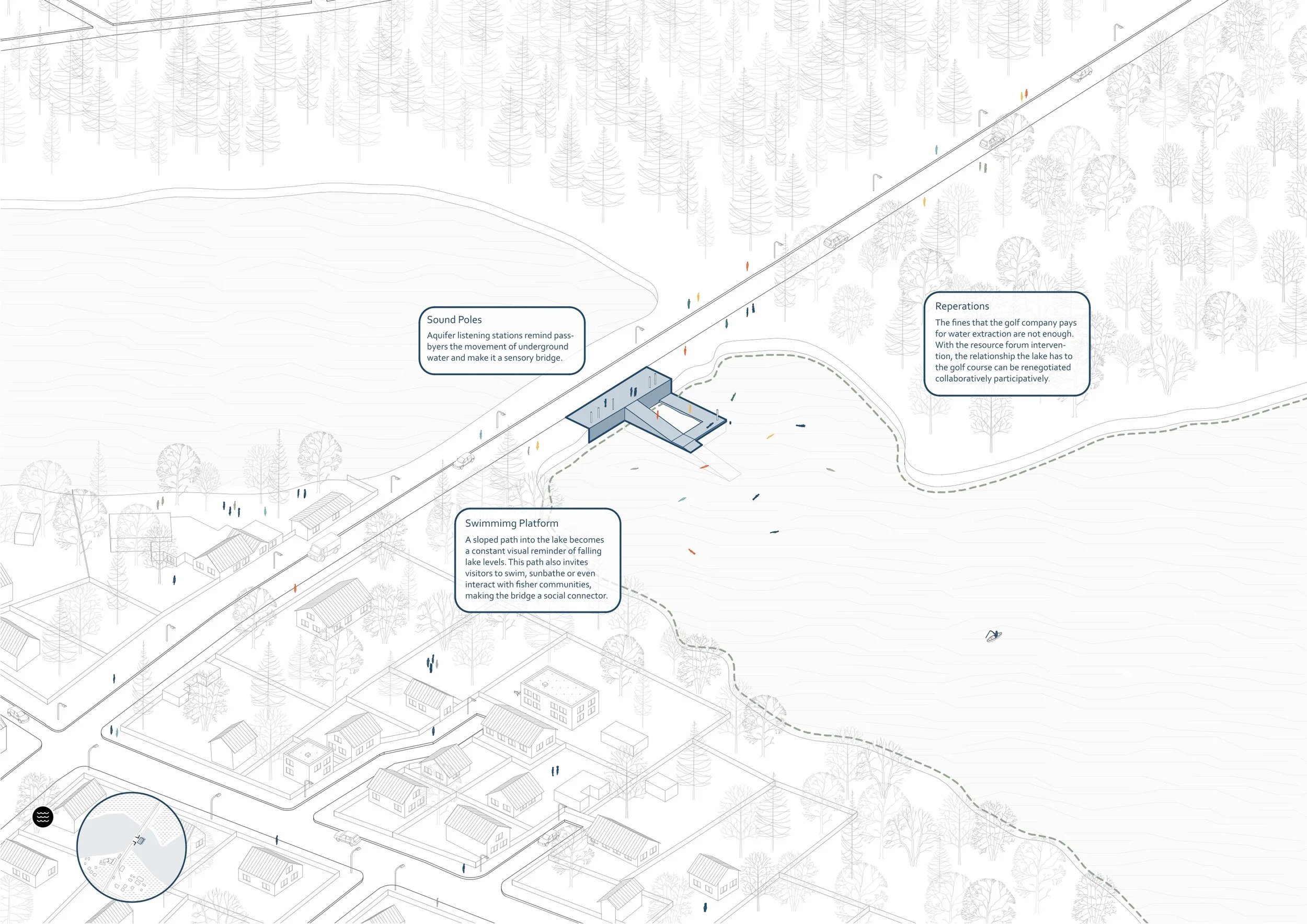
Altseddin bridge intervention
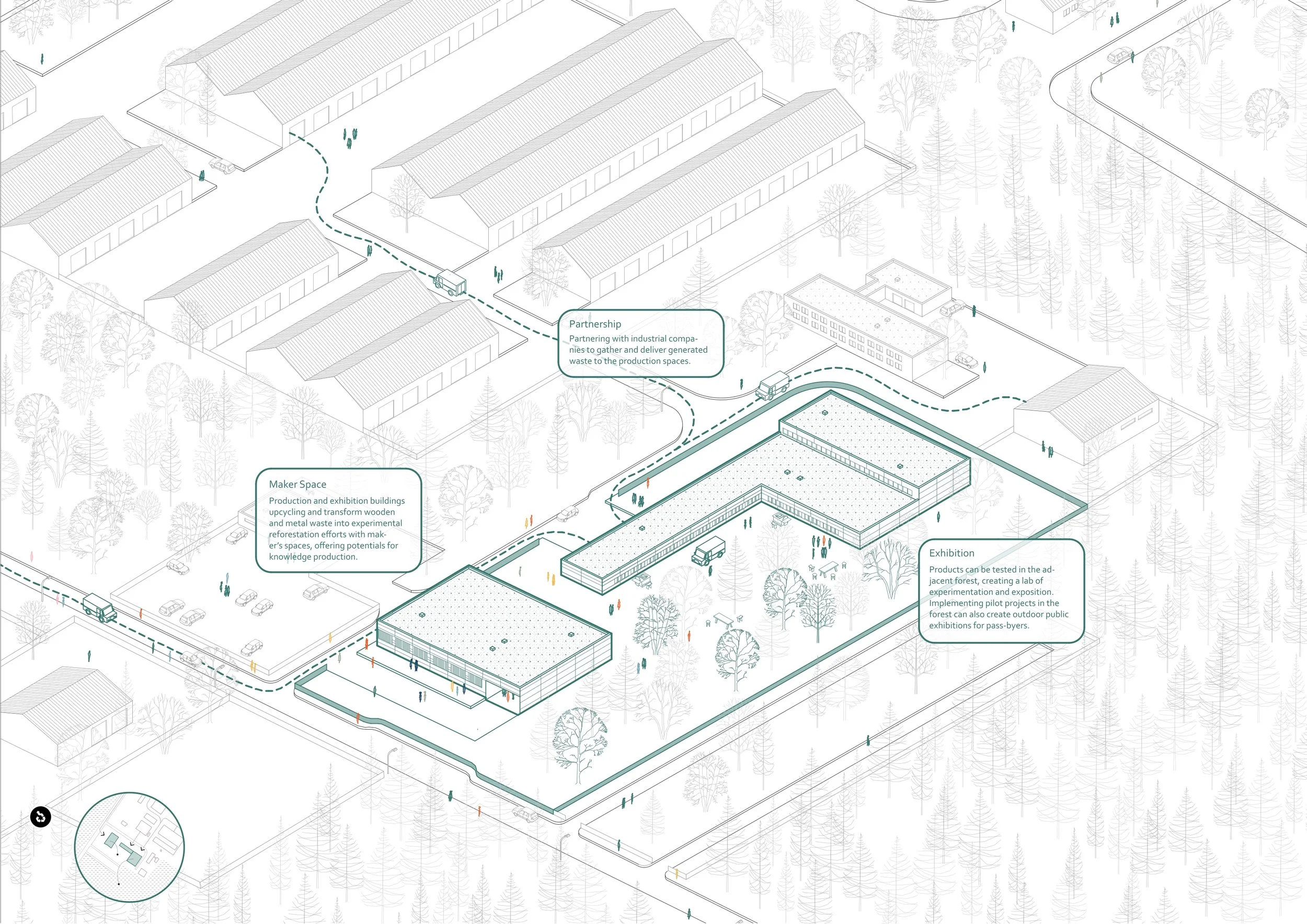
Maker's space intervention
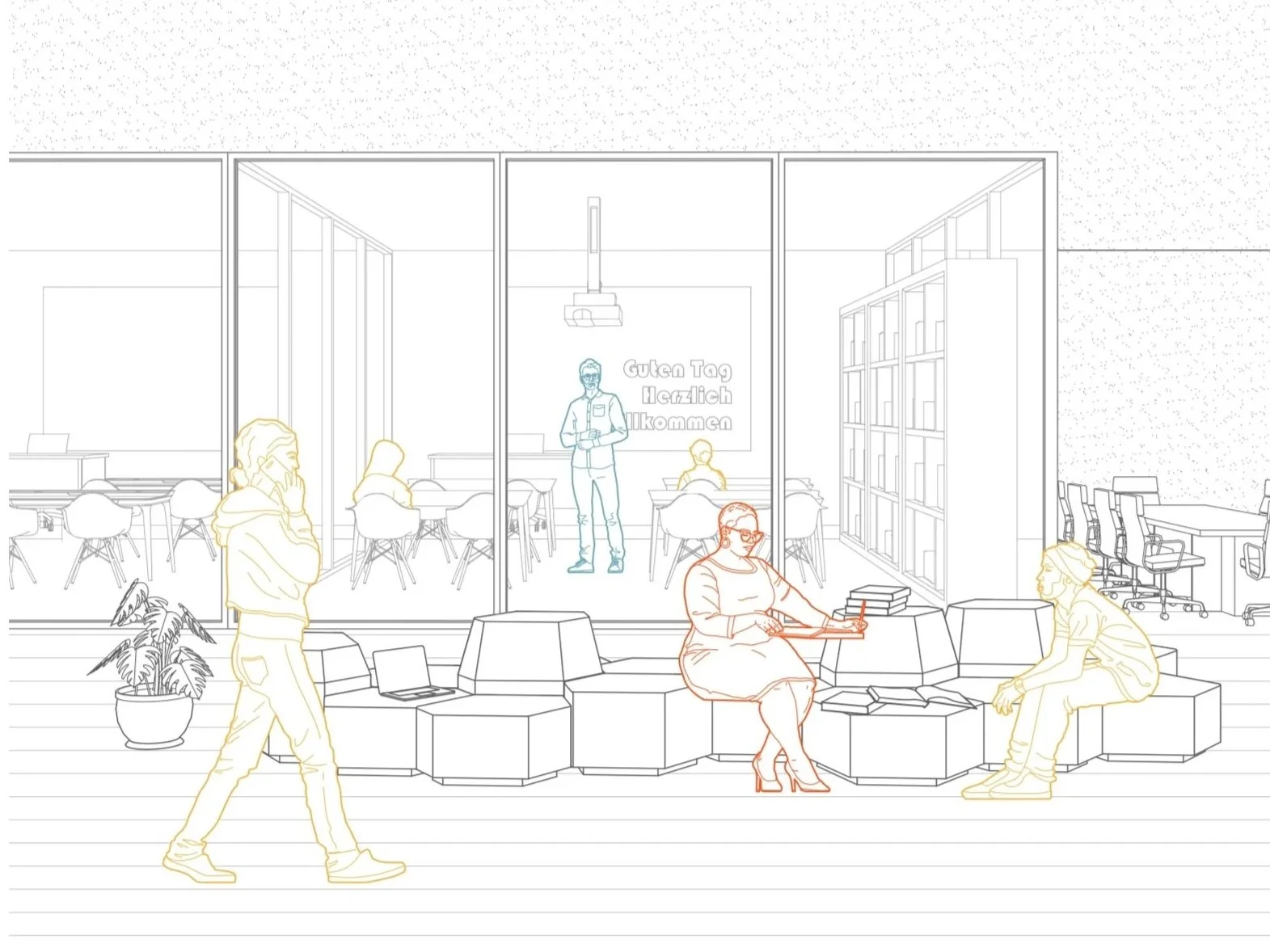
German language class
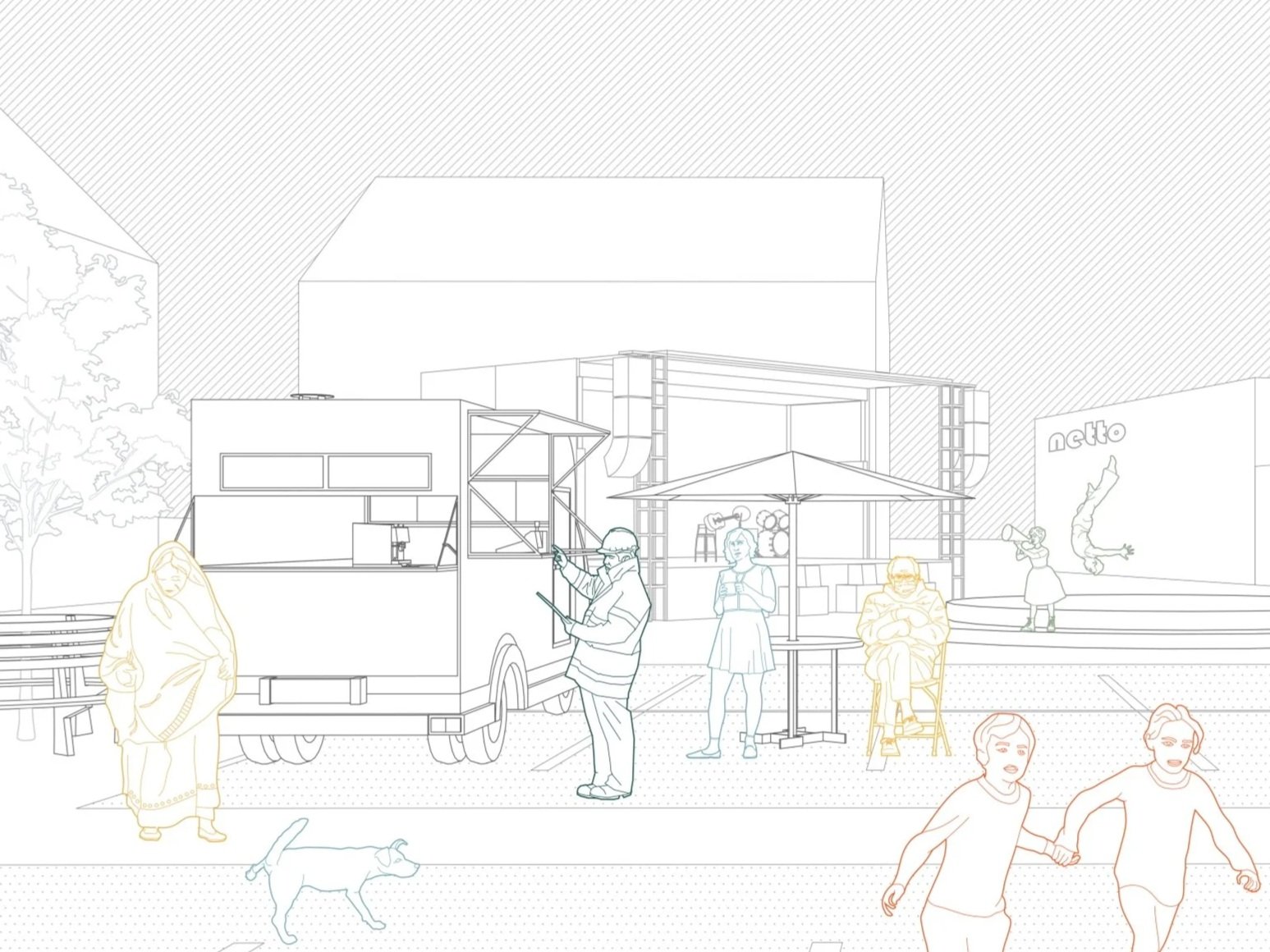
Netto square events
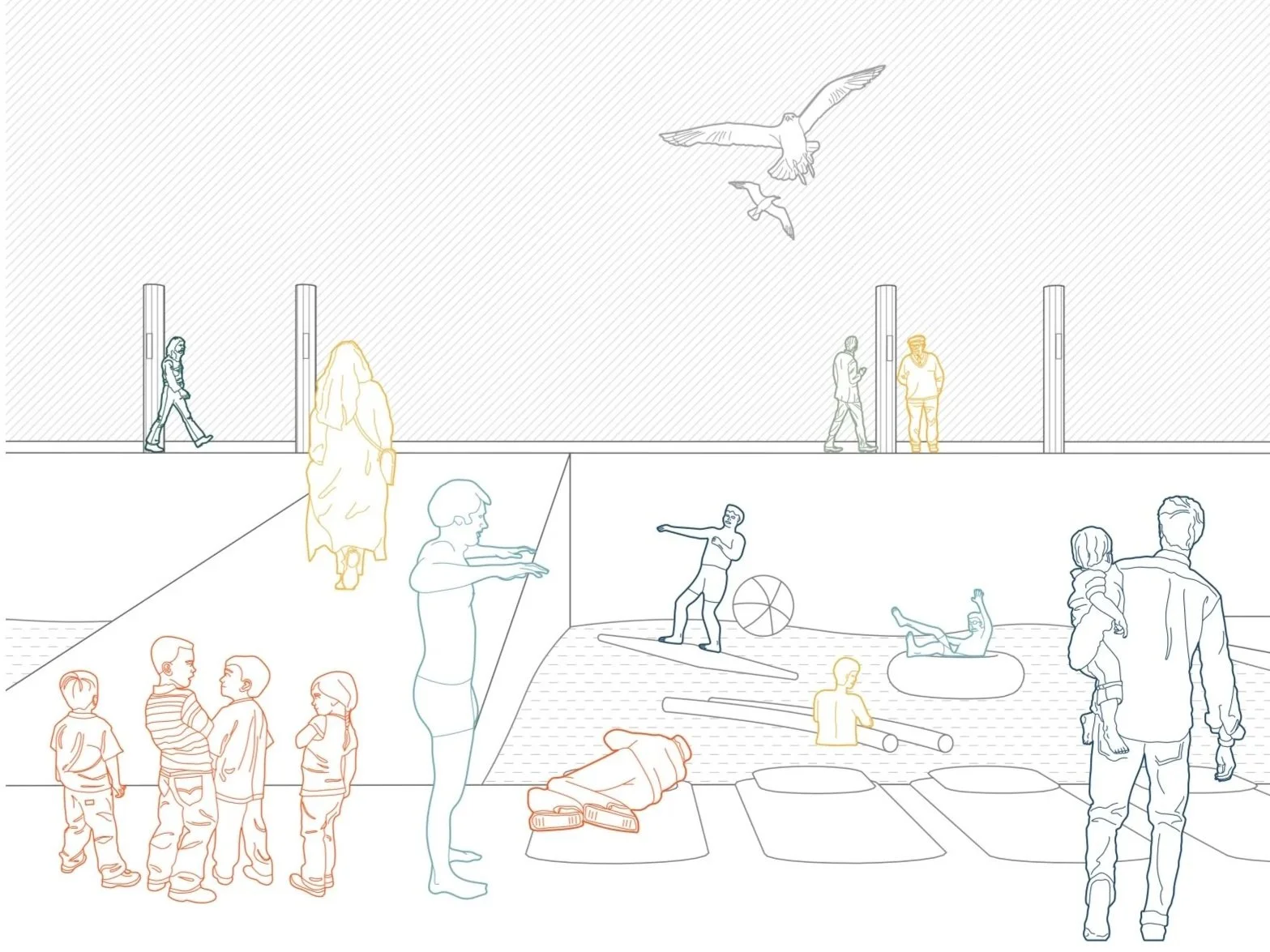
Bridge / lake activities
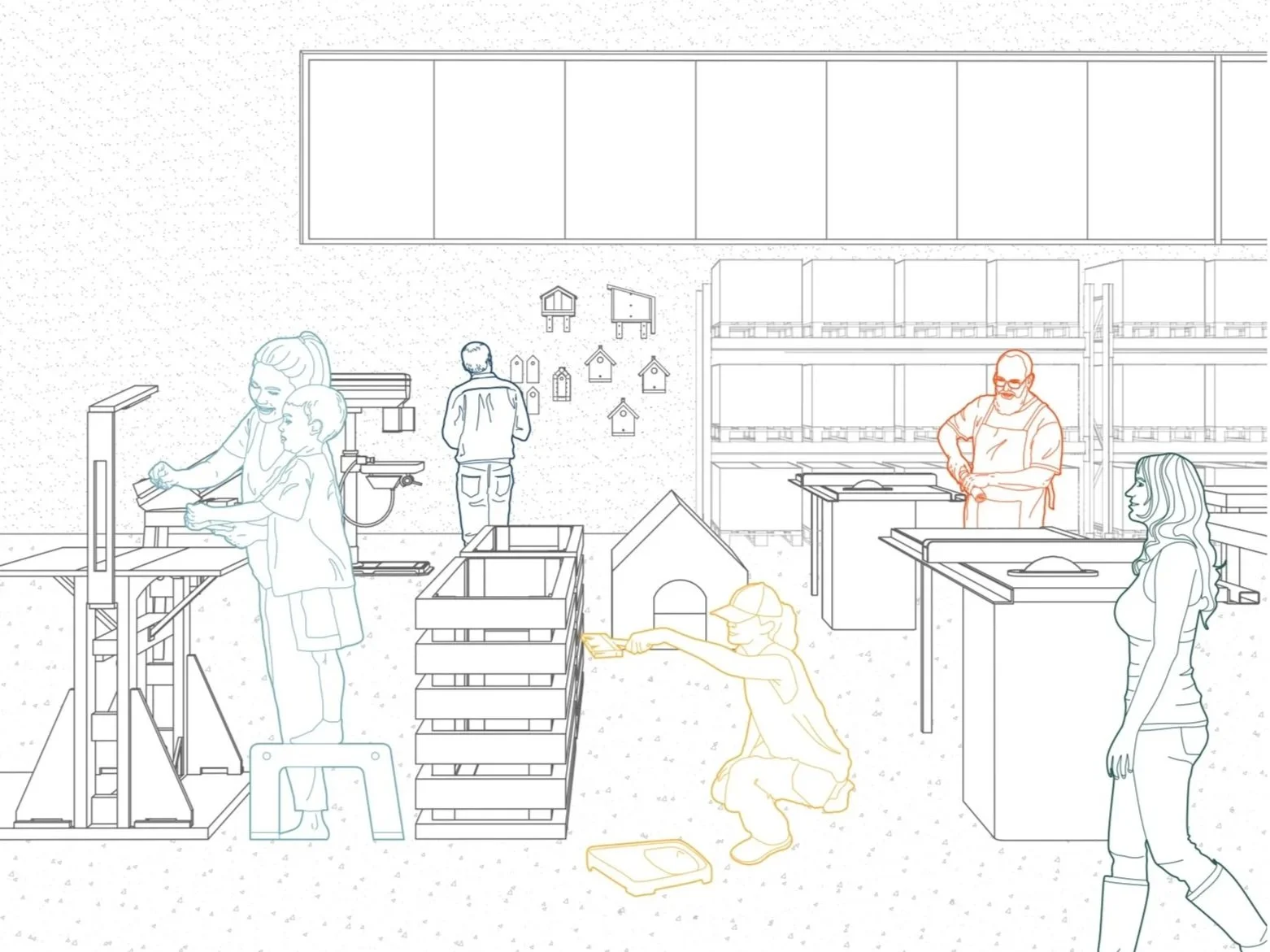
Maker's space